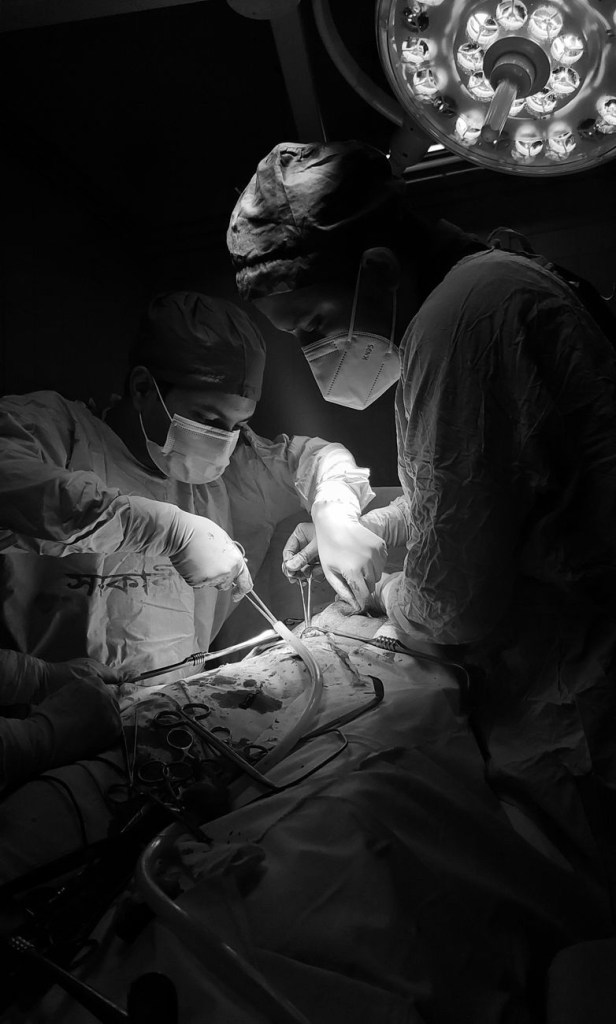
ATLANTA — Millions of patients undergoing surgery each year are told they will be gently put to sleep, but medical experts emphasize that general anesthesia is a far cry from a typical nap.
While natural sleep is a dynamic, highly organized state where the brain cycles through restorative stages and consolidates memories, general anesthesia is a pharmacologically induced, reversible state that locks the brain into a rigid, non-cycling rhythm.
Common intravenous drugs like propofol act by latching onto GABA, the brain’s primary inhibitory system, forcing almost the entire cortex into slow delta waves. Neuroscientists describe the effect as an ocean liner plowing through a choppy sea, flattening the higher-frequency gamma and beta waves normally used for complex thought and sensory integration.
This forced synchronization effectively cuts communication between distant brain regions, breaking the circuits required for consciousness. Yet, recent studies reveal that the brain is not entirely turned off during the procedure, as monitoring of the hippocampus shows that auditory and language centers continue to process grammar and predict speech patterns even though a lack of network synchronization ensures no conscious memories are formed.
Recognizing these distinct brainwave signatures has transformed modern anesthesiology, allowing clinicians to monitor real-time electroencephalograms to track patient depth precisely. By watching these patterns, specialists can steer clear of excessive dosages that trigger burst suppression, a dangerously deep state linked to prolonged grogginess, emotional distress, and postoperative delirium.
Ultimately, researchers say that unraveling the neuroscience of anesthesia shifts the perception of a surgical blackout from a passive slumber to a masterclass in precise neural control.
 Suite South Co.
Leave a comment